

By early 2026, the 802.11be (Wi-Fi 7) standard has reached a level where we feel confident recommending Wi-Fi 7 investments for all enterprise networks.
The previous standard, Wi-Fi 6 (802.11ax), has been in broader use since 2020. This means the standard has been in active use for several years, and in the coming years Wi-Fi 6 will start moving into a “regular” or mature standard—similar to what has happened with earlier generations. With Wi-Fi 7, a variety of devices are now available, and the ecosystem is developing rapidly.
In this post we do real test we have performed in our lab to see Ruckus and client devices current maturity of the Wi-Fi7 standard.
We focus here on MLO, Multi Link Operation, this allows wifi7 to use multiple radios simultaneously to make more reliable and increase throughput.
Wi-Fi 7 is not necessarily required in every environment. For example, in warehouses built for logistics purposes, the coverage and stability improvements of Wi-Fi 6 may be completely sufficient.
In addition, there are currently no signs that “proper” Wi-Fi 7 warehouse scanners will arrive on the market in the near term. The refresh cycle for these devices is often long (around 8 years), because they are expensive client devices.
Today you can buy high-end Wi-Fi 7 client devices from different manufacturers in stores. At the same time, there are also more affordable options that can make an older computer compatible with the new standard, for example:
Intel BE200 requires Intel 12 generation processor and chipset, PCI-e card contains only RF comonents, protocol is partly implemented inside motherboard chipset. Intel also required latest version of Windows11 to support MLO.
3K Group offers enterprise-class Ruckus Networks Wi-Fi access points (APs) R770 R670 R370 , Ruckus strengths are advanced radio technology and very good coverage and stability.
Ruckus device management is possible on three platforms:
In practice, Wi-Fi 7 client devices (and APs) can broadly be divided into three groups.
High-end devices support, for example:
For example, the Google Pixel 9 and Ruckus R770 can use the 2.4 / 5 / 6 GHz bands in parallel, and do so simultaneously and bidirectionally. The result is a more uninterrupted connection, better stability, and often better coverage and throughput.
The second group includes devices that use, for example, the 2.4 and 5 GHz channels at the same time. For example, the Ruckus R370.
There are also devices on the market that can transmit and receive on only one channel at a time, using the eMLSR (Enhanced Multi-Link Single Radio) solution.
This variant does not communicate on multiple bands simultaneously, but it enables very fast switching—for example 5 GHz → 6 GHz or to 2.4 GHz depending on the situation.
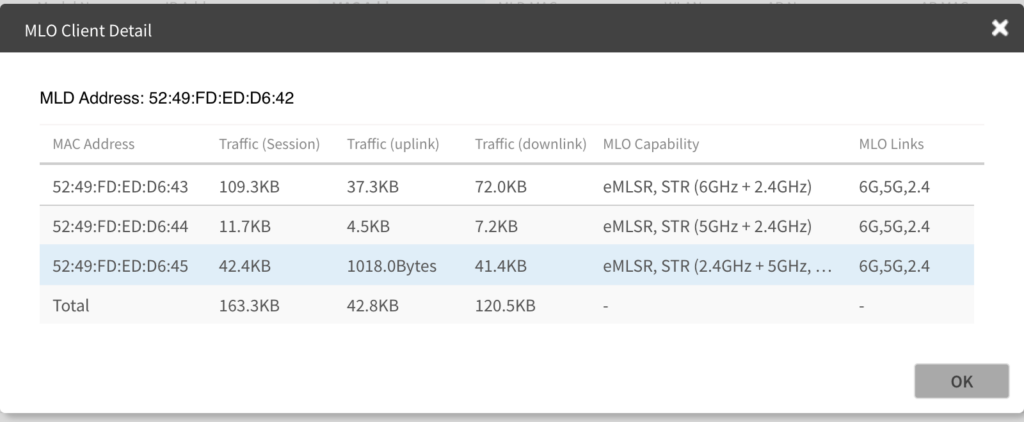
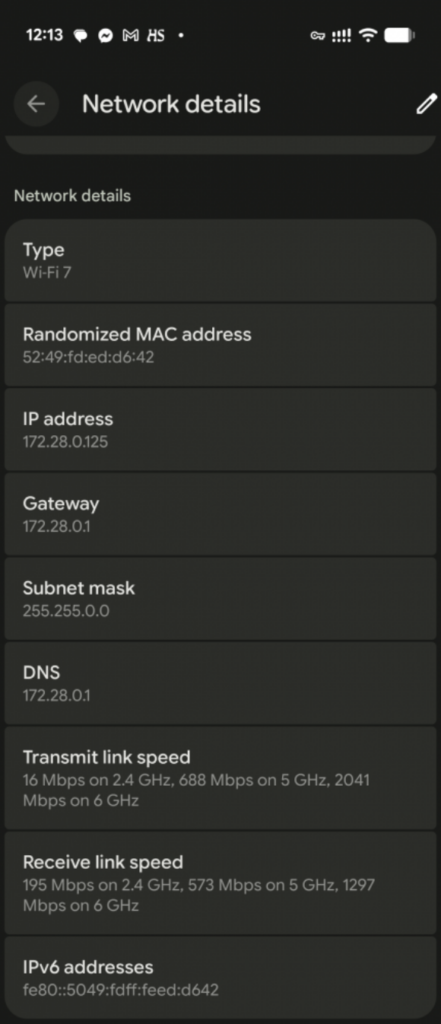
In this test, the Ruckus R770 + Pixel 9 negotiate an MLO Multi-Link connection on all bands and use it dynamically (visible both in the SmartZone 7.1.1 view and on the Pixel 9 screen).
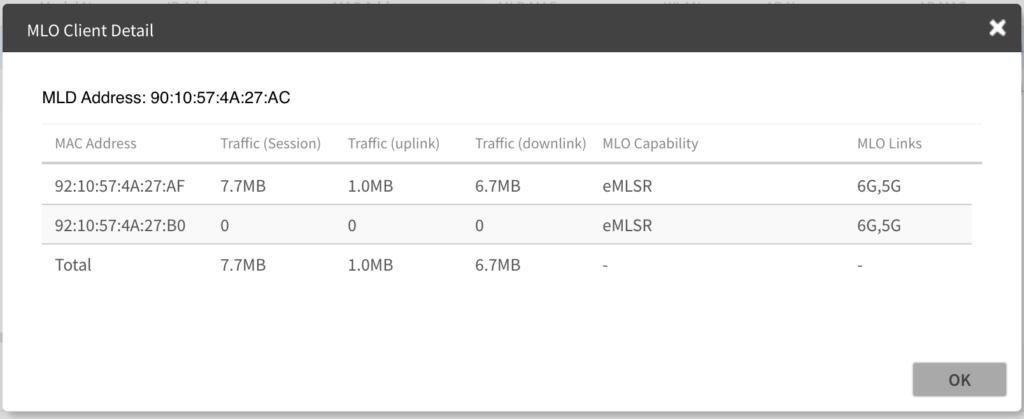
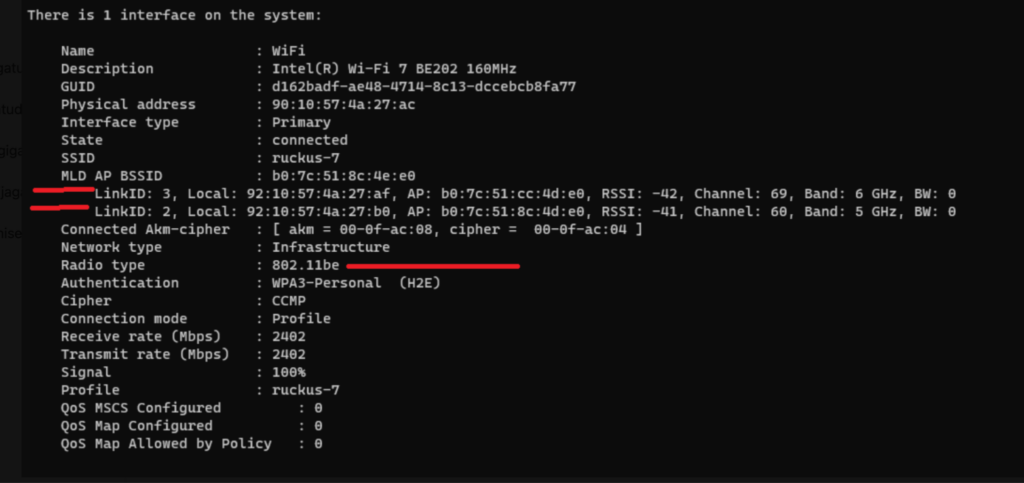
Intel BE202 2x2 MIMO WiFi7 adaptert + Ruckus R770 also negotiate the use of multiple channels. Although the device has two antennas, two 1×1 MIMO antennas are used to detect simultaneous reception on two frequencies; transmission uses the eMLSR protocol.
3k Ruckus website https://ruckus.3kgroup.ee